Every year, as spring turns into summer, one word begins appearing across headlines throughout the Mexican Caribbean: sargassum.
For first-time visitors and those considering purchasing property in Cozumel, the arrival of sargassum often raises questions and concerns. The reality, however, is far more interesting and complex than most headlines suggest.
Sargassum is a natural ocean phenomenon that has existed for centuries in the Atlantic Ocean. While its presence has increased significantly in recent years, it has also created opportunities for innovation, research, job creation, and sustainable development throughout the Caribbean region.
Understanding what sargassum is, why it reaches our shores, and how Cozumel manages it helps provide a realistic perspective on life and investment opportunities on the island.
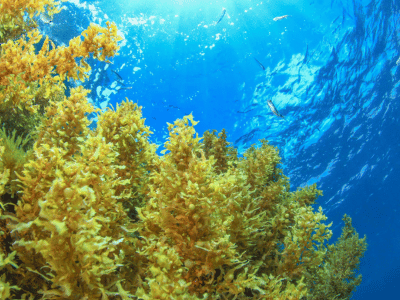
Sargassum is a floating brown seaweed naturally found in the Atlantic Ocean. Unlike many marine plants, it does not need to attach itself to the ocean floor in order to survive.
For centuries, large amounts of sargassum have floated freely in an area known as the Sargasso Sea in the North Atlantic. Historical records show that even Christopher Columbus documented encounters with these floating seaweed fields during his voyages.
Traditionally, small quantities occasionally reached the Caribbean and Gulf of Mexico coastlines as part of normal ocean cycles. However, over the last decade, the volume observed has increased dramatically.
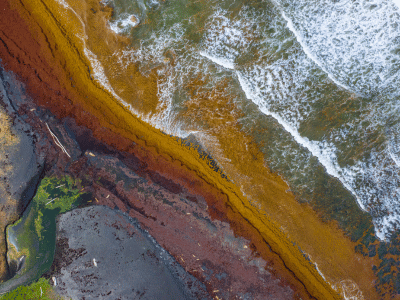
Contrary to popular belief, it doesn't originate on Caribbean beaches. Sargassum forms naturally in the tropical Atlantic, within a vast floating ecosystem stretching between West Africa and South America. Ocean currents and seasonal winds carry it across the Atlantic into the Caribbean each year.
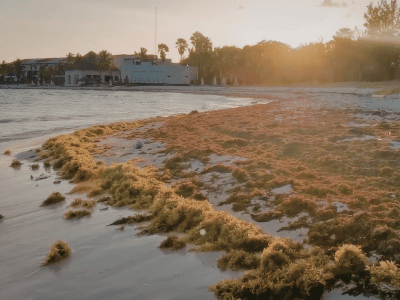
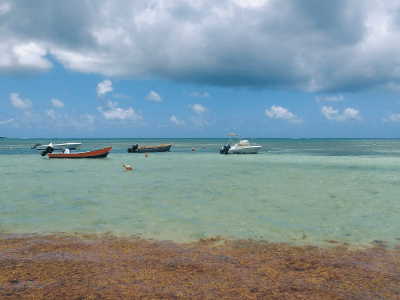
In recent years, larger blooms have become more common due to warmer ocean temperatures and increased nutrient runoff from major rivers. While sargassum continues to affect parts of the Caribbean in 2026, its impact varies greatly by location.
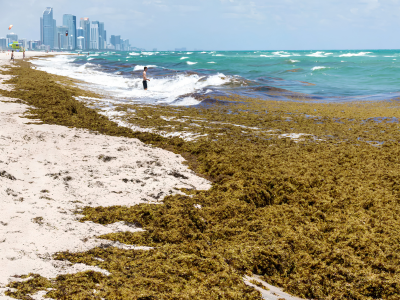
2026 - Miami FL, USA
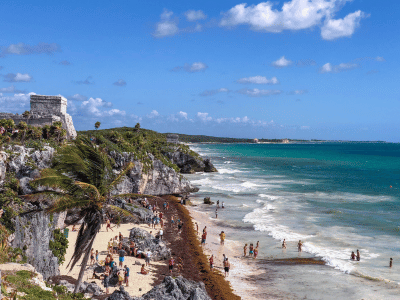
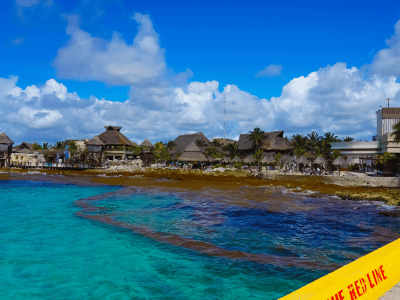
2021 - Tulum, QRoo, Mex
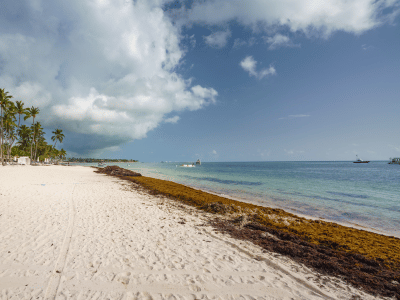
2018 - Bavaro, Punta Cana, D.R.
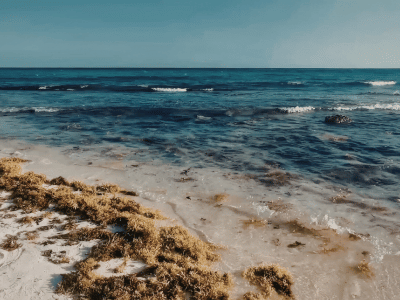
Although ocean conditions vary from year to year, sargassum season in Cozumel generally occurs between:
The heaviest arrivals typically occur between May and August.
It is important to understand that conditions can change significantly depending on ocean currents, winds, and weather patterns. Not every beach experiences the same level of accumulation, and conditions can improve dramatically within days.
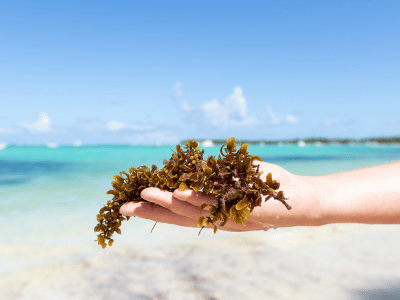
Researchers continue studying the phenomenon, but several factors appear to contribute to the increase in sargassum blooms.
Agricultural runoff from various regions of the Americas eventually reaches the ocean through major river systems.
These nutrients act as fertilizer for marine algae.
Warmer waters create favorable conditions for accelerated growth.
Shifting current patterns influence how large masses of sargassum travel across the Atlantic and into the Caribbean.
Many scientists believe climate change is playing a significant role in the expansion of sargassum blooms.
The result is a larger volume of seaweed entering Caribbean waters each year.
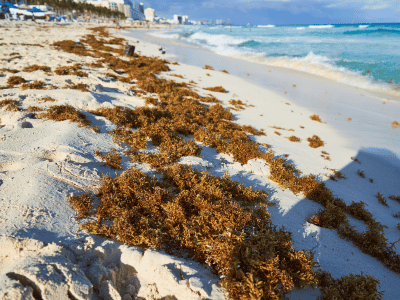
Cancun
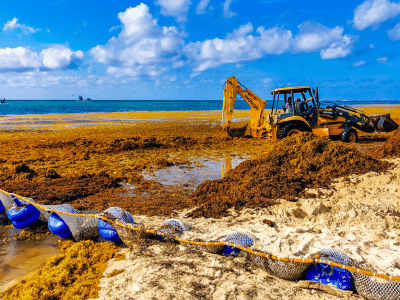
Playa del Carmen
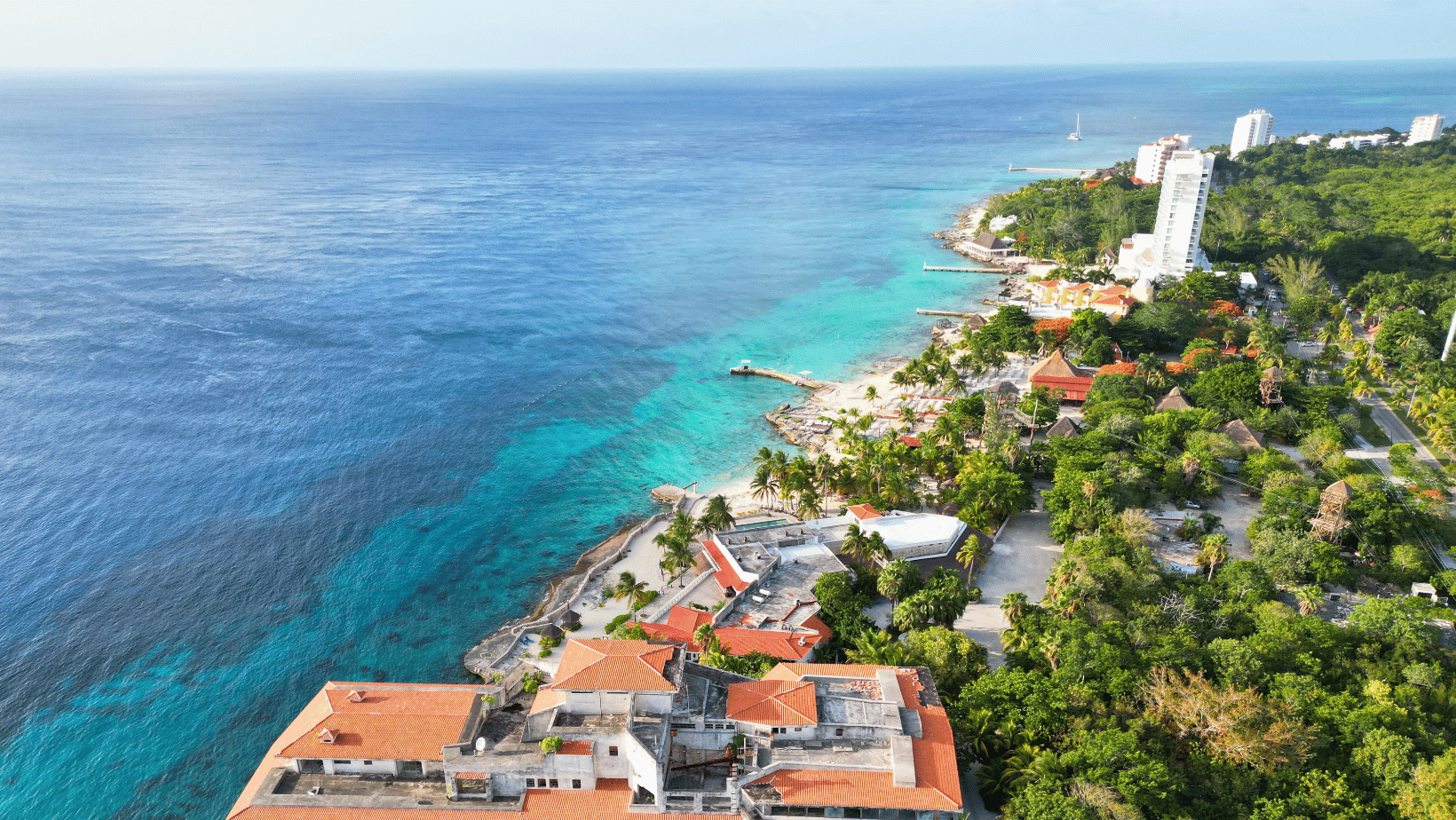
One of Cozumel's geographic advantages is its diverse coastline.
Most sargassum arrives from the east due to prevailing winds and currents. As a result, the island's eastern shoreline generally experiences the greatest accumulation.
The western side of Cozumel, however, often remains considerably clearer.
Areas that typically experience less impact include:
This is one reason why so many international buyers continue to choose Cozumel for retirement, vacation homes, and investment properties.
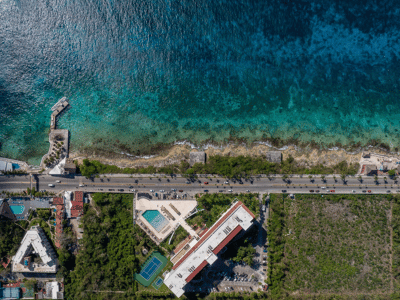
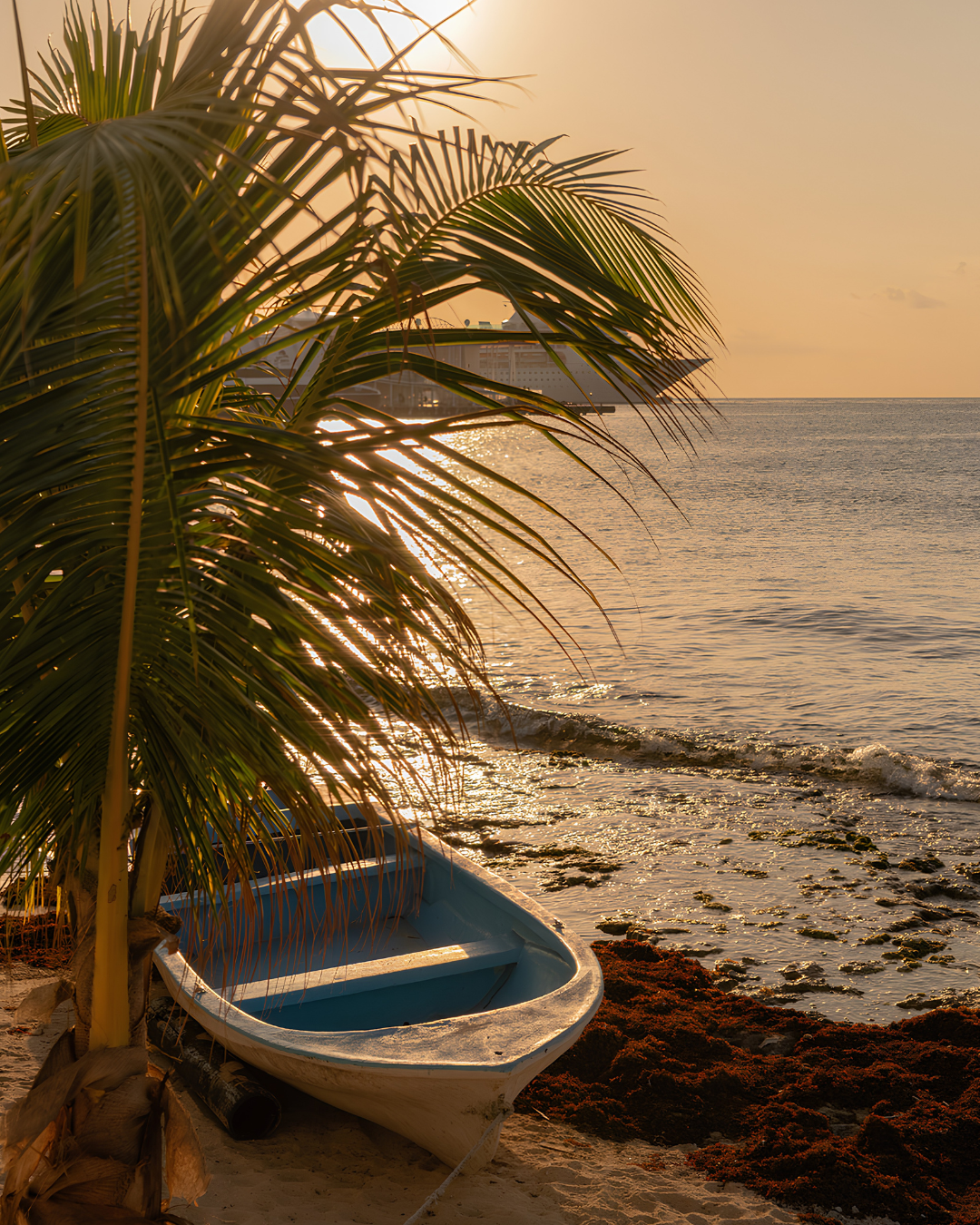
As expected, the west and southwestern shores had little to no sargassum thanks to the island's natural protection from prevailing winds and currents.
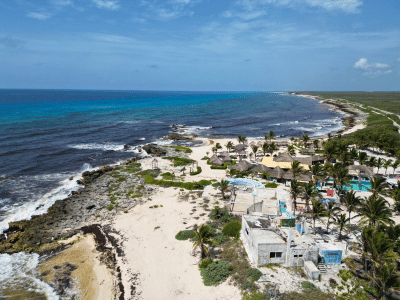
Punta Morena
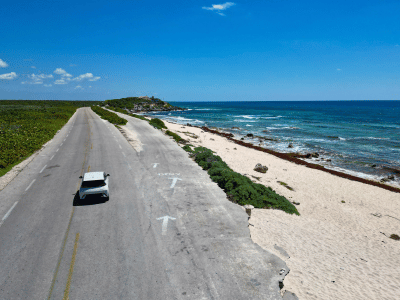
Chen Rio
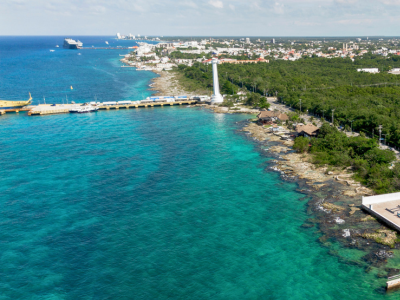
Caletita
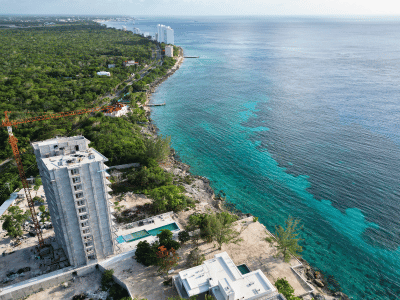
North Hotel Zone
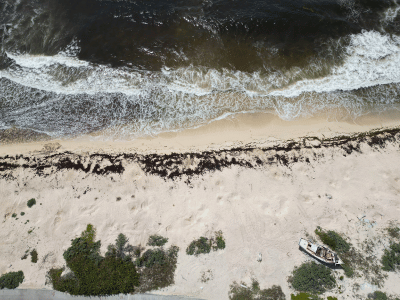
In recent years, governments, environmental organizations, universities, and private companies have increased efforts to manage the situation.
Current initiatives include:
Technology now allows experts to track large offshore sargassum formations before they reach the coast.
Many beaches conduct regular cleanup efforts throughout the season.
Floating barriers are used in some locations to reduce shoreline accumulation.
Universities and research centers continue exploring new management and utilization methods.
Because the issue affects many Caribbean nations, international collaboration has become increasingly important.
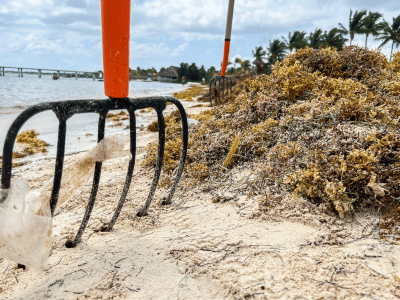
No immediate solution exists, several long-term strategies may help reduce future impacts.
These include:
Sargassum is not solely a local issue, it is a global environmental challenge requiring international cooperation.
One of the most exciting developments is the growing effort to transform sargassum into valuable resources.
Today, researchers and companies are exploring uses such as:
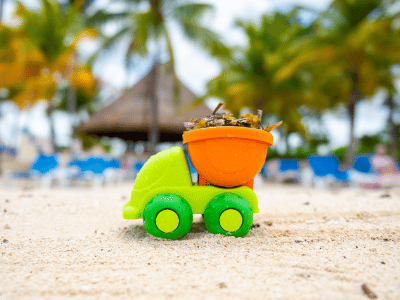
Properly processed sargassum can be converted into nutrient-rich compost.
Some companies are developing eco-friendly bricks, panels, and building materials containing sargassum fibers.
The biomass has potential applications in renewable energy production.
Researchers are experimenting with biodegradable paper and packaging products.
Certain compounds found in sargassum may have future uses in chemical and pharmaceutical industries.
What is currently viewed as waste may become an increasingly valuable raw material in the years ahead.



For investors, sargassum presents an emerging sector with significant potential.
Businesses focused on:
could help create jobs while contributing to environmental solutions.
As global demand for sustainable products continues to grow, businesses capable of transforming sargassum into useful materials may find attractive opportunities throughout the Caribbean.
There is no question that sargassum remains one of the Caribbean's most visible environmental challenges.
At the same time, it is important to recognize that this is a recurring natural phenomenon that has become part of the region's annual cycle.
Despite seasonal arrivals, millions of visitors continue to enjoy Cozumel's crystal-clear waters, world-class diving, vibrant marine life, and exceptional quality of life every year.
The path forward lies in education, adaptation, innovation, and responsible tourism.
By supporting sustainable initiatives and encouraging environmental awareness, residents, visitors, and investors can all play a role in transforming a seasonal challenge into a long-term opportunity.
In Cozumel, resilience has always been part of island life, and the future will be shaped by those who see opportunity where others see obstacles.
Collective Action: A Shared Responsibility
Sargassum is not a challenge that can be solved solely through machinery, offshore barriers, or government programs.
Addressing it requires the active participation of the entire community, residents, business owners, visitors, scientists, government agencies, and investors alike.
Every sector has an opportunity to contribute, by supporting environmental initiatives, promoting sustainable practices, participating in beach cleanup efforts, or investing in innovative reuse projects.
As more people become involved and better understand the scope of the issue, a collective movement emerges, one capable of turning an environmental challenge into an opportunity for awareness, innovation, and sustainable growth for future generations.
Support Local Businesses
When you visit Cozumel, choosing to support local businesses has a real impact. The island is famous for its beautiful beaches, there's so much more to discover, from family-owned restaurants and artisan shops to diving, snorkeling, cultural tours, fishing charters, and unforgettable local experiences.
During quieter seasons, local businesses are often the ones most affected as visitor numbers decline. That's why your support matters even more. Every meal, tour, purchase, or recommendation helps local families, preserves the island's unique character, and keeps Cozumel's vibrant community thriving.
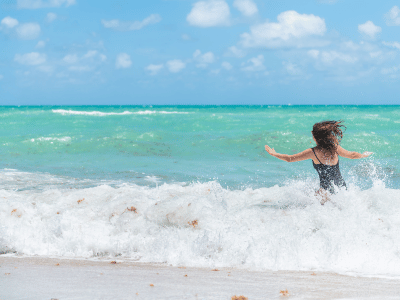
No matter the time of year, the mexican caribbean, offers something special.
There's so much more to Cozumel than the beach, lushy jungles and wildlife sanctuaries to cultural landmarks, unforgettable sunsets, dine at a family-owned restaurant, book a tour with a local guide, shop from island artisans, the island is full of experiences waiting to be discovered
You'll see why keep visitors coming back year after year.
And if you Love Cozumel, Share it
Simply recommend your favorite hidden gem to another traveler and help them discover the island beyond the beaches.
— The Karen Cozumel Real Estate Team