
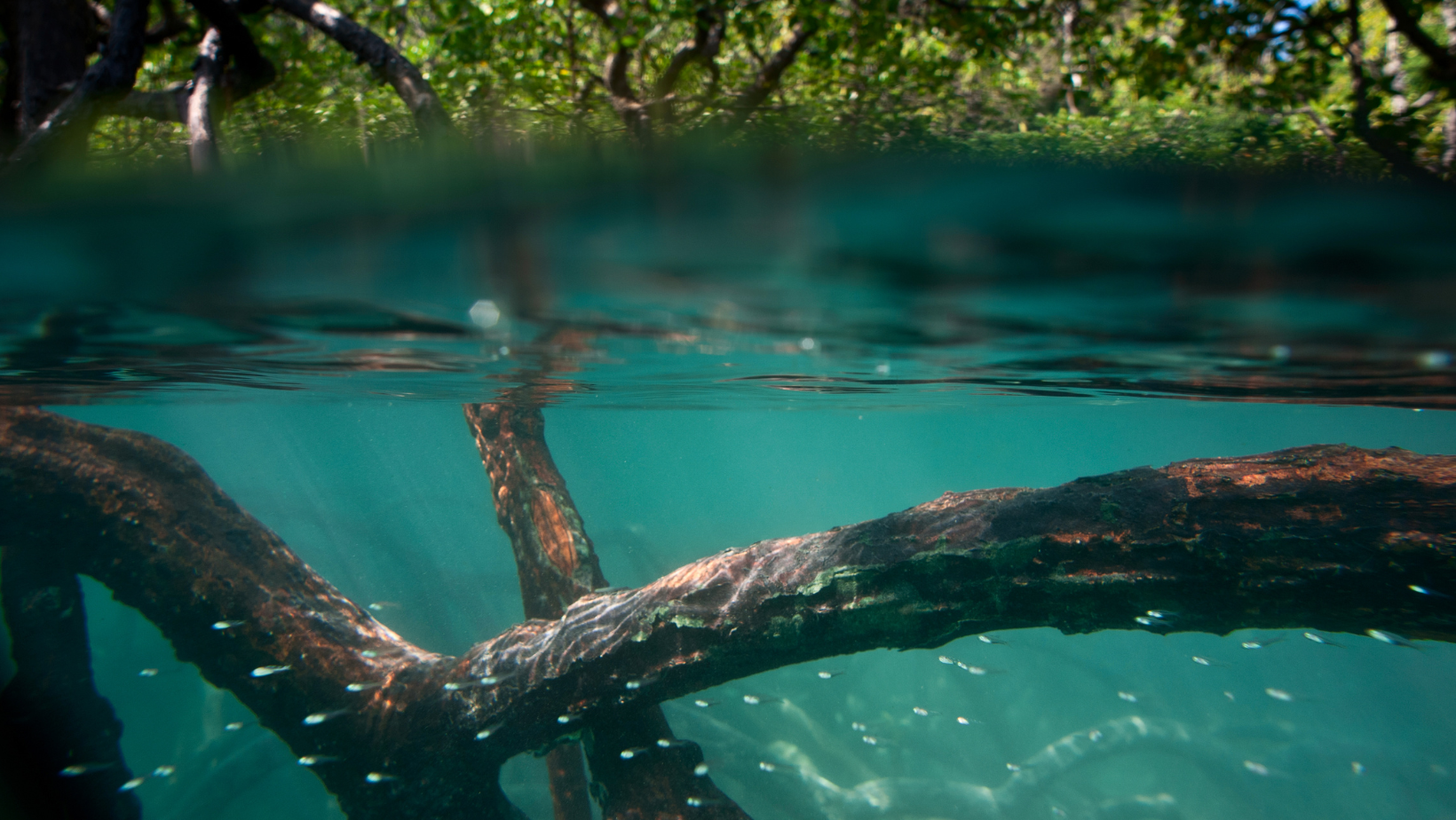
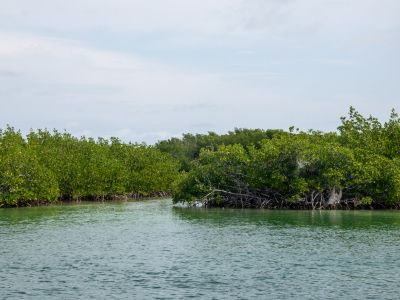
Along Cozumel’s coastline, some of the island’s most important natural systems are easy to overlook.
Mangroves may not have the postcard appeal of white-sand beaches, but their tangled roots and dense canopies serve a remarkable purpose. They provide shelter for wildlife, help stabilize shorelines, and contribute to the health of coastal ecosystems. Understanding these forests reveals another essential side of the island we call home.
Cozumel's natural identity extends far beyond its turquoise waters and coral reefs. Along its coastlines, mangrove forests form an essential connection between land and sea, influencing water quality, and helping stabilize coastal environments. Their tangled roots and dense canopies may appear unassuming, but the ecological processes taking place within them have consequences that reach well beyond the shoreline
At the edge of Cozumel, where the land meets the Caribbean, there is a type of forest that does not follow the usual rules. Its trees grow in salty conditions, their roots may be submerged by the tides, and the ground beneath them can be soft, muddy and short of oxygen.
These are mangroves: coastal forests found in tropical and subtropical regions around the world. In Mexico, they are an important part of the country's coastal ecosystems, and Quintana Roo has the largest mangrove area of any Mexican state, according to national monitoring data.
The word mangrove describes both the trees and, more broadly, the ecosystem they form. It is not a single species, but a community of specially adapted plants, animals, microorganisms, water and sediment.
On an island such as Cozumel, this distinction matters. A mangrove forest is not simply a collection of trees beside the sea. It is a living system that connects the shoreline with the water, the soil and the wider Caribbean environment.
Understanding how it works reveals a side of island life that is easy to overlook, even when you live just minutes away from it.
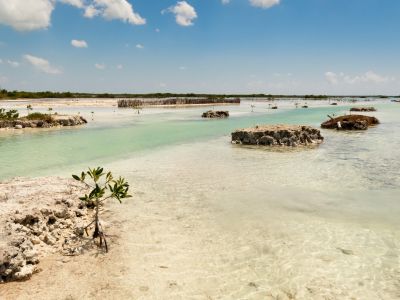
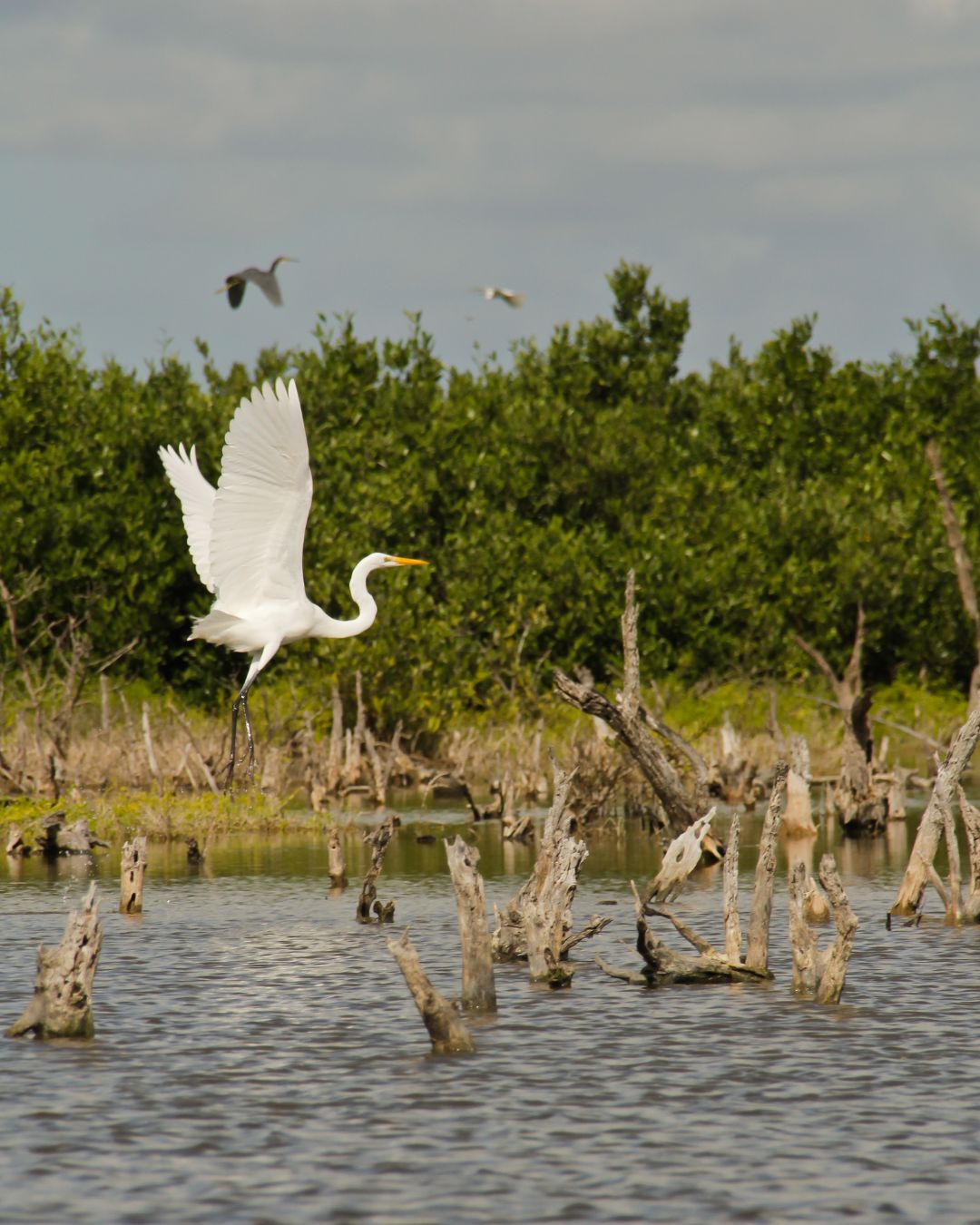
For most plants, salt is a problem. Too much salt makes it difficult for roots to absorb water, even when the surrounding soil is wet. Mangroves have evolved several strategies that allow them to survive where many other trees cannot.
Different species manage salt in different ways. Some limit how much salt enters through their roots. Others can excrete salt through specialized glands in their leaves. Certain species also tolerate salt while maintaining the internal balance of water and minerals their cells need to function.
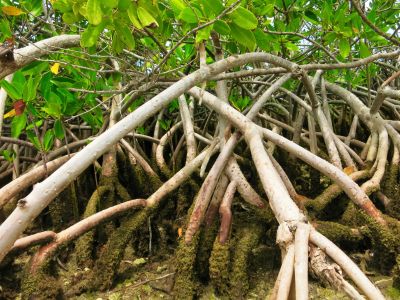
Their roots are equally remarkable. Some mangroves develop arching roots that help support the tree in unstable sediment. Others produce vertical roots that extend above the ground, allowing them to take in oxygen in waterlogged soils.
Why is that necessary? Because soil flooded by water often contains very little oxygen compared with well-aerated ground. The roots must solve a problem that ordinary garden trees rarely face.
Mexico is home to four principal mangrove species: red, black, white and buttonwood, commonly known by those English names. They differ in their growth patterns, root structures and tolerance of environmental conditions.
Mangroves are not invincible, however. They still need suitable water conditions, sediment, temperature and space. Their adaptations explain how they survive in challenging environments, not why they can survive every disturbance.
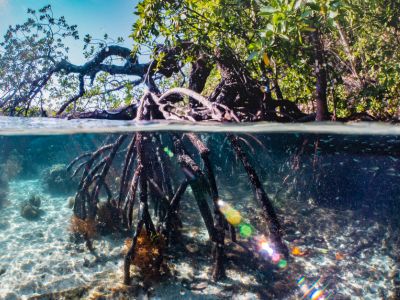
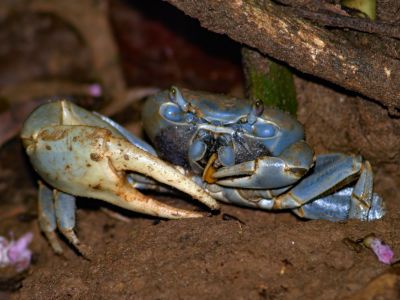
Look beneath the canopy of a mangrove forest and the landscape becomes much more complicated than it first appears.
Roots create an intricate three-dimensional structure, providing surfaces where algae, small invertebrates and other organisms can live. Spaces between the roots offer shelter to fish, shrimp, crabs and other animals, while fallen leaves and organic matter support food webs throughout the ecosystem.
For some marine species, mangroves are especially important during their early stages of life. Juvenile fish and crustaceans can use the roots as places to hide from predators while feeding and growing.
Think of the mangrove as an underwater neighborhood with narrow passages, sheltered corners and plenty of small residents. It is not a nursery for every species, and not every animal stays there permanently, but the habitat can make a significant difference to survival.
This is one reason mangroves matter beyond their immediate boundaries. Animals that grow or feed in coastal habitats may later move into other marine environments, contributing to wider food webs.
In Cozumel, where the surrounding Caribbean supports fishing, diving and other marine activities, the relationship between coastal habitats and the sea is part of a much larger ecological picture. The condition of one habitat can influence the opportunities available to wildlife elsewhere.
Cozumel is well known for its coral reefs, but a healthy marine environment depends on more than what happens underwater.
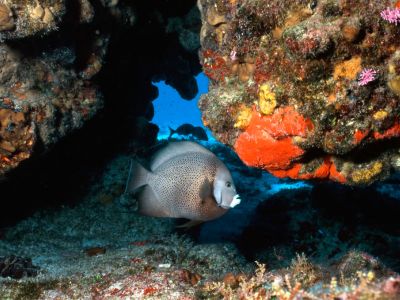
Mangroves, seagrass beds and coral reefs perform different functions. Seagrasses are flowering plants that live underwater and help stabilize sediment. Coral reefs provide complex structures for marine life. Mangroves occupy the coastal transition between land and water.
These habitats can complement one another.
Mangroves trap some sediment and organic particles, helping reduce the amount that moves into nearby waters. Seagrass beds stabilize the seabed, while coral reefs provide habitat for an extraordinary variety of marine organisms. The strength of these connections varies with geography, water movement and the condition of each habitat.
It is important not to oversimplify the relationship: not every mangrove forest directly borders a reef, and healthy mangroves alone cannot guarantee healthy coral. Water quality, temperature, disease, physical damage and other factors also influence reef conditions.
Still, the broader principle is clear. Coastal ecosystems do not operate as isolated units. What happens on land can affect the sea, and changes in marine environments can influence coastal communities in return.
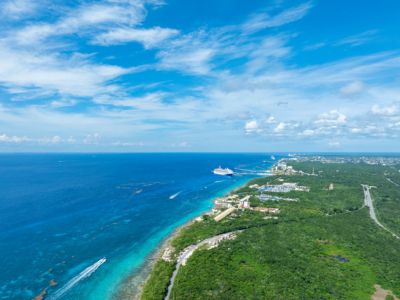
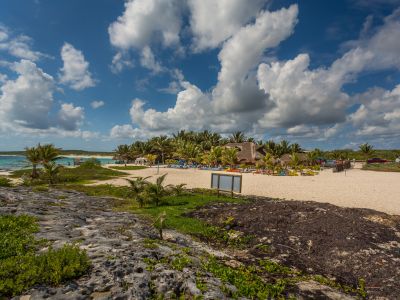
The importance of these habitats is recognized internationally. The Manglares y Humedales del Norte de Isla Cozumel site was designated a Ramsar Wetland of International Importance on February 2, 2009, according to Mexico's National Commission of Natural Protected Areas (CONANP).
The Ramsar designation recognizes the international importance of wetlands and highlights the value of conserving the ecological functions they support. It does not mean that every mangrove area on the island has identical protection or management rules, but it underscores the significance of Cozumel's northern wetlands.
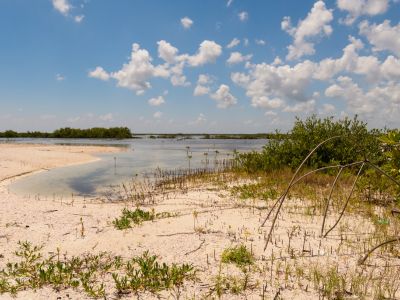
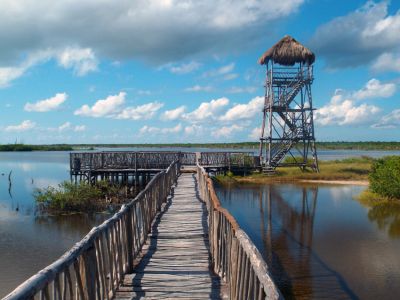
A mangrove forest can help reduce some of the physical energy associated with coastal hazards. Its roots, trunks and branches create resistance as water moves through the vegetation, while the forest can also help stabilize sediment and reduce erosion.
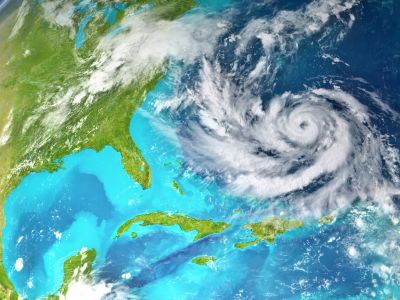
During storms, this structure may lessen wave energy and limit some of the water movement reaching the shoreline. Mangroves can also contribute to reducing flood impacts under suitable conditions.
But the protection they provide depends on factors such as forest width, density, water depth, storm characteristics and local coastal geography. They are not a wall that can stop every hurricane, nor can they eliminate storm surge or flooding.
That distinction is particularly relevant in the Caribbean, where tropical storms and hurricanes are part of the region's climate.
For Cozumel, coastal resilience involves multiple elements working together, including natural habitats, appropriate construction, drainage, infrastructure and preparedness. Mangroves are one part of that system, not a replacement for the others.
Their value becomes especially apparent when considering what it takes to rebuild a natural coastal forest after it has been damaged or removed. Mature ecosystems develop over time, and restoring their full structure and function is not as simple as planting a row of trees.
Mangroves are often discussed in connection with blue carbon, a term used for carbon captured and stored by coastal and marine ecosystems.
Like other plants, mangroves absorb carbon dioxide during photosynthesis and use the carbon to build leaves, branches, trunks and roots. Some of the organic material they produce eventually becomes part of the soil.
The soil is particularly important. In many mangrove forests, waterlogged conditions slow the decomposition of organic matter, allowing carbon to accumulate in sediments over long periods. This means a substantial amount of the ecosystem's stored carbon can exist below ground, not just in the trees visible above the surface.
When mangrove soils are disturbed, drained or exposed to oxygen, some of that stored carbon can be released back into the atmosphere.
This is why conserving an existing mangrove forest and restoring a degraded one are not necessarily equivalent achievements. Protecting an established ecosystem can preserve carbon stocks that took many years to accumulate.
The climate benefits are significant, but they should be understood in context. Mangroves are not a substitute for reducing greenhouse gas emissions from energy, transportation and industry. They are one valuable component of a broader climate strategy.
Their story is also a reminder that some of the most important environmental processes are happening in places we rarely see: beneath the mud, among the roots and inside the soil.
Blue carbon is therefore more than an interesting scientific concept. It helps explain why conserving coastal wetlands matters not only for local wildlife and shoreline stability, but also for the global climate.
Water management takes on a different meaning when you live on an island.
Cozumel depends on groundwater resources, and research on the island's aquifer highlights the importance of managing a limited resource while addressing growing demand and water-quality pressures. Research on Cozumel's island aquifer
Mangroves are part of this wider coastal water system. Their roots and sediments can retain some particles, transform or trap certain pollutants, and influence the movement of water and nutrients through coastal wetlands. However, their filtering capacity has limits, and it depends on the type and quantity of contaminants, the flow of water and the condition of the ecosystem.
A mangrove forest should not be mistaken for a treatment plant. It cannot make every kind of polluted water safe, nor can it replace proper wastewater treatment and groundwater protection.
The relationship between groundwater and mangroves is also more complicated than a simple one-way flow. In coastal settings, freshwater and seawater interact through underground geology, rainfall, tides and local water levels. The exact connections depend on the location.
Mangroves have ecological value, but they also have economic significance.
Healthy coastal habitats can support fisheries, contribute to coastal protection, store carbon and provide opportunities for scientific research and nature-based recreation. These benefits are sometimes described as ecosystem services: the ways natural systems contribute to human well-being and economic activity.
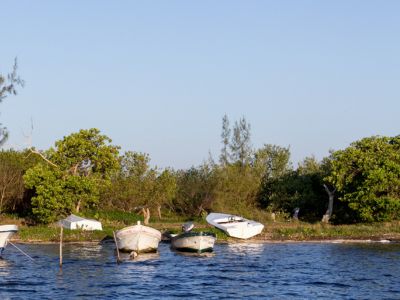
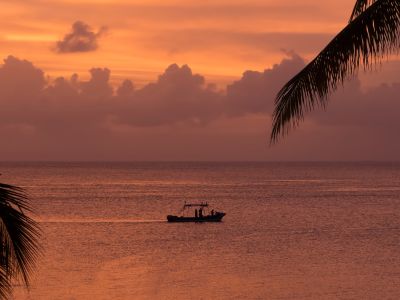
For instance, in Cancun's Nichupté Lagoon, mangrove surroundings are frequently used as shelter for boats and water jet skis during hurricanes.
Some of these benefits are relatively easy to recognize. Others are harder to measure because they involve avoided costs, long-term ecological processes or resources shared by many people.
For example, the value of coastal protection is not simply the price of the trees. It may include the damage that is reduced when waves or currents lose some energy before reaching vulnerable areas. Similarly, a habitat that supports fish populations may contribute to livelihoods well beyond the boundary of the forest itself.
In Cozumel, where real estate, tourism, marine recreation and local livelihoods all depend in different ways on the condition of the island, mangroves are part of the broader conversation about long-term economic resilience.
This does not mean that every mangrove area has the same financial value, or that environmental decisions can be reduced to a dollar figure. It means that development decisions should account for both the immediate use of land and the wider benefits that can be lost when natural systems are damaged.
Sometimes the most economically sensible decision is not the one that produces the fastest visible return.
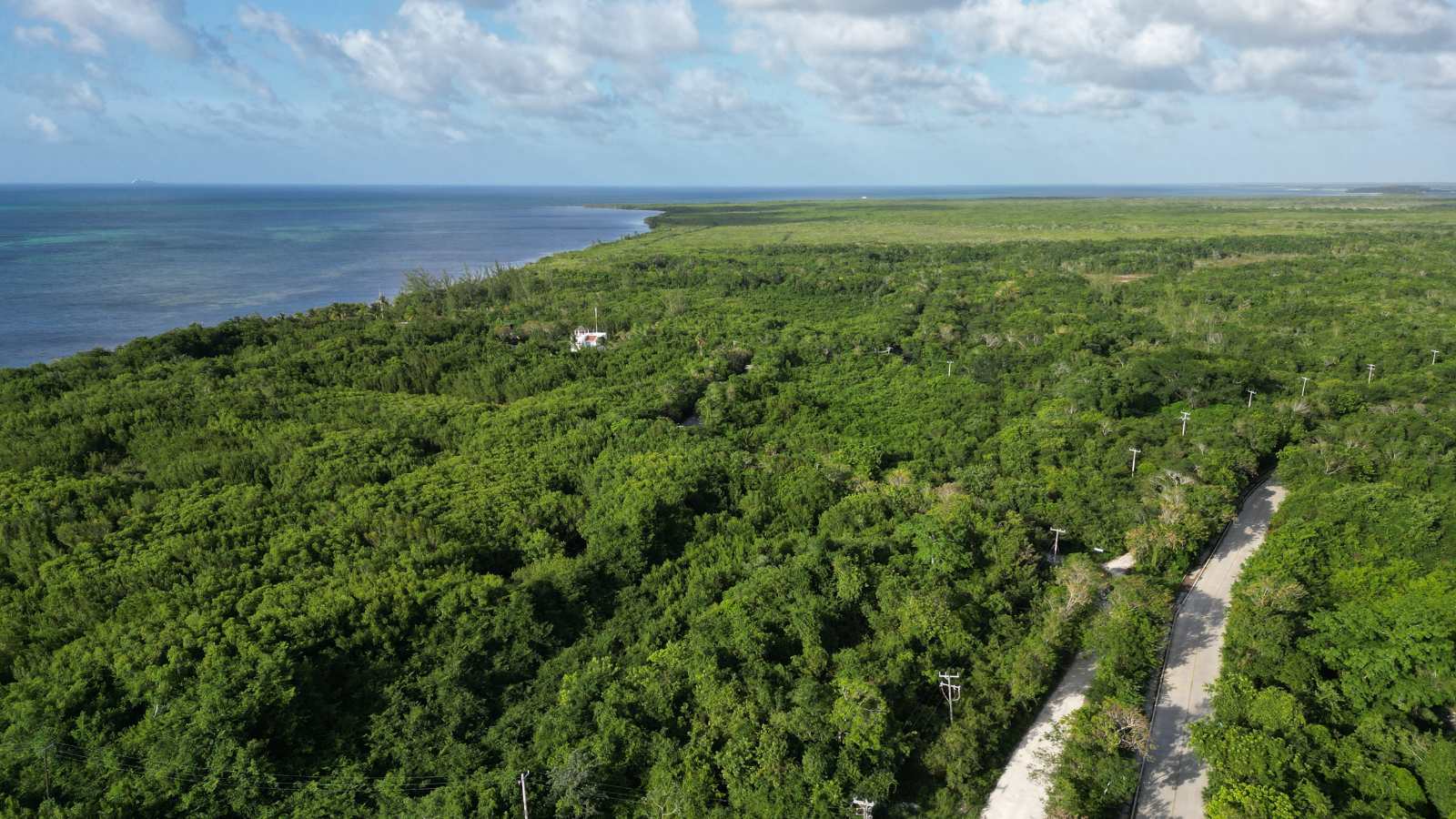
The challenge is not simply choosing between development and nature. Communities need housing, infrastructure, services and economic opportunities.
Mangroves can be affected by land clearing, changes in drainage, construction, pollution and alterations to water flow. Rising sea levels and changing storm patterns add further pressure, particularly where forests have little room to move inland.
That last point is important. Mangroves may be able to adjust to changing coastal conditions when sediment processes, water movement and available land permit it. Where roads, buildings or other barriers prevent that movement, the forest can become trapped between rising water and development a problem often called coastal squeeze.
In Mexico, mangroves receive legal protection under environmental legislation, including provisions of the General Law of Ecological Balance and Environmental Protection and the General Law of Wildlife. The rules that apply to a particular site depend on its location, legal status and the activity proposed.
Mangroves can look quiet from the outside, but their appearance tells only part of the story. A forest's condition depends on factors such as water levels, salinity, sediment, vegetation structure and the movement of nutrients and organisms through the habitat.
Scientists use field surveys, satellite imagery and long-term monitoring to understand how mangrove forests change. Mexico's National Commission for the Knowledge and Use of Biodiversity, known as CONABIO, coordinates a national mangrove monitoring system that uses mapping and other information to track distribution and changes over time.
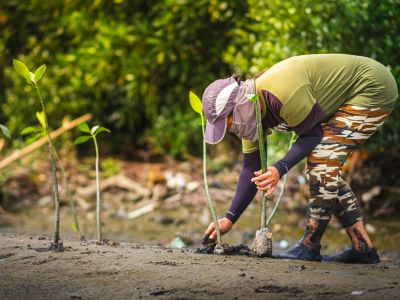
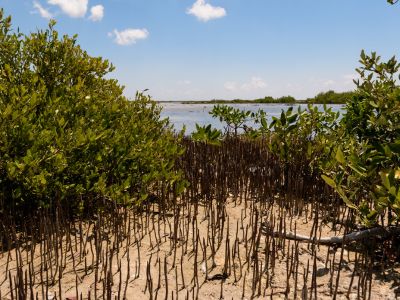
Mangroves are among the most valuable ecosystems in coastal regions, yet they are vulnerable to human activities, including poorly planned development, land clearing and changes to natural water flows. Their importance goes far beyond the landscape.
Fortunately, Cozumel has established protected natural areas that safeguard important habitats, including mangroves. Mexican environmental legislation also provides specific protections for these ecosystems. Under applicable regulations, activities that damage mangroves or disrupt their hydrological flow may be prohibited, and certain projects require environmental authorization. The exact restrictions depend on the property's location, its environmental characteristics and the applicable land-use regulations. These protections are essential, but conservation also depends on awareness, responsible decisions and respect for the natural environment.
At Cozumel Real Estate Services, we believe education is part of responsible real estate practice.
Our commitment is to promote responsible property decisions, share relevant environmental information and avoid representing properties when we determine that doing so would contribute to harm to protected ecosystems. This means asking the right questions, encouraging appropriate due diligence and helping clients understand that owning property on an island comes with a responsibility to the place around it.
That is one reason we publish articles like this. We want to make environmental knowledge more accessible and encourage a deeper understanding of the natural systems that sustain Cozumel. Because protecting the island is not the responsibility of one organization or one profession alone. It is a shared commitment, built through the choices we make every day.
Our goal is simple:
To help people find their place in Cozumel while respecting the natural world that makes this island worth protecting.
-The Karen Cozumel Real Estate Team
